
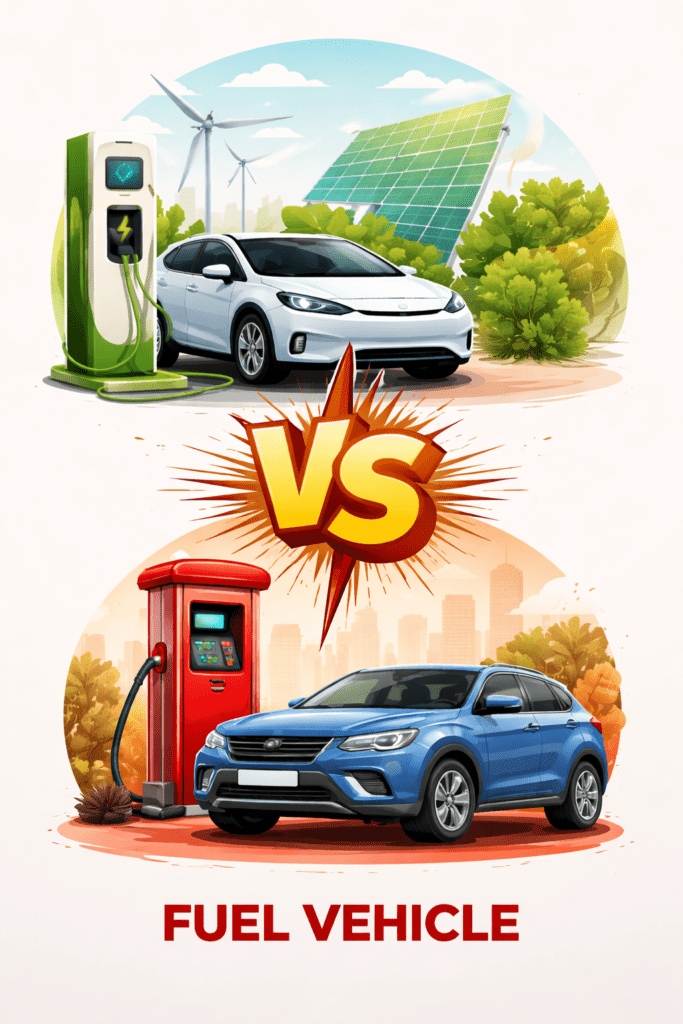
Electric Car Comparison – Cost, Performance & Maintenance
The automotive world is changing fast. With rapid improvements in technology and growing environmental awareness, many drivers today face a big question: Should I choose an Electric Vehicle (EV) or a traditional Fuel Vehicle (petrol/diesel)?
In this blog, we present a detailed Electric Car Comparison with fuel vehicles, covering key factors such as cost, performance, maintenance, environmental impact, convenience, and future trends — so you can make an informed decision for your next car.
1. What Are EVs and Fuel Vehicles?
Electric Vehicles (EVs)
Electric vehicles run on electric motors powered by rechargeable batteries. They don’t use petrol or diesel at all — instead, you charge them using an electric outlet or public charger.
Fuel Vehicles (Petrol/Diesel Cars)
These are the traditional vehicles most of us grew up with — powered by internal combustion engines that burn petrol or diesel to generate power.
2. Cost Comparison: Upfront and Long‑Term
Upfront Cost
- Fuel Vehicles tend to be cheaper to buy initially.
- EVs usually cost more upfront because of expensive battery systems.
However, governments in many countries offer subsidies, tax rebates, or incentives for EV purchases — which can narrow the price gap.
Running Cost
- EVs win here. Charging electricity generally costs less than fuel, so your daily running cost is lower.
- Fuel vehicles cost more over time because petrol and diesel prices fluctuate and are often higher.
Resale Value
- Fuel vehicles have a long history of stable resale values.
- EV resale values are still evolving — although strong demand for EVs is helping support used EV prices.
Verdict: EVs may cost more upfront, but are often cheaper to run in the long term.
3. Maintenance and Reliability
Maintenance
Fuel cars have many moving parts — engine oil, filters, belts, spark plugs — all of which require regular service.
EVs have far fewer moving parts, which means:
- No oil changes
- Fewer mechanical failures
- Lower servicing costs
Battery Life
The biggest cost in EV maintenance is the battery, but most modern EVs come with long battery warranties (8–10 years or more).
⚠️ Battery replacement is expensive, but with improved technology, most EV batteries can last over a decade.
Verdict: EVs are simpler and cheaper to maintain overall.
4. Environmental Impact
Pollution & Emissions
- Fuel Vehicles emit CO₂, NOx, and other pollutants directly into the air — contributing to air pollution and climate change.
- EVs produce zero tailpipe emissions — meaning cleaner air in cities.
However, EVs rely on electricity — so their environmental impact also depends on how electricity is generated. If the grid uses renewables (solar, wind, hydro), the overall emissions are much lower.
Verdict: EVs are better for the environment — especially as grids become greener.
5. Convenience: Refueling vs. Recharging
Fuel Vehicles
✔ Quick refueling at abundant petrol/diesel pumps
❌ Fuel prices fluctuate widely
Electric Vehicles
✔ Charge at home overnight
✔ No fuel price shocks
✔ Increasing public charging stations
❌ Charging takes longer than filling fuel
❌ Public chargers are expanding but not yet as ubiquitous as fuel pumps in some areas
👉 For everyday city driving, many EV owners simply plug in at home and never visit a public charger.
6. Performance and Driving Experience
EVs
- Instant torque — fast acceleration from a standstill.
- Quiet and smooth drive.
- Regenerative braking helps recharge the battery while driving.
Fuel Cars
- Strong performance in long‑distance or high‑speed conditions.
- Bigger range on some models.
- Familiar driving experience.
Verdict: For city driving and instant responsiveness, EVs often feel more fun — while fuel cars still have an edge for long highway trips in areas with fewer chargers.
7. Range & Charging vs. Fuel Distance
Fuel Vehicles
✔ Long range per fill
✔ Quick refills — usually in a few minutes
EVs
✔ Modern EVs can offer 300–600+ km per charge
❌ Charging — 30 minutes to several hours depending on charger type
With rapid expansion of fast‑charging stations, long trips in EVs are getting easier — but planning is still required.
📈 8. Future Outlook: Trends and Tech
Electric vehicles are rapidly improving:
- Battery technology increasing range
- Charging networks expanding fast
- New models launching every year
- Governments pushing EV adoption through incentives
Meanwhile, fuel cars face tightening emissions regulations — meaning more expensive engines and limited future growth.
Final Comparison: Quick Summary
| Factor | EVs | Fuel Vehicles |
|---|---|---|
| Upfront Cost | Higher | Lower |
| Running Cost | Lower | Higher |
| Maintenance | Lower | Higher |
| Environmental Impact | Cleaner | Polluting |
| Convenience | Charging time needed | Quick refueling |
| Performance | Instant torque | Good for long trips |
| Future Proofing | Strong growth | Slowing trend |
Conclusion: Which Should You Choose?
Choose an EV if:
✔ You want lower running costs
✔ You care about the environment
✔ Most of your driving is in the city
✔ You can charge overnight at home
Choose a Fuel Vehicle if:
✔ You need the lowest upfront price
✔ You drive long distances often
✔ Charging infrastructure in your area isn’t strong yet
Final Thoughts
Both EVs and fuel vehicles have their strengths — and the best choice depends on your lifestyle, budget, and driving habits. As technology advances, EVs are becoming more convenient and affordable, making them a strong long‑term choice. But fuel vehicles still offer practicality and familiarity, especially where charging options are limited.

Pingback: EV vs petrol car Cost Performance & Benefits 2026