
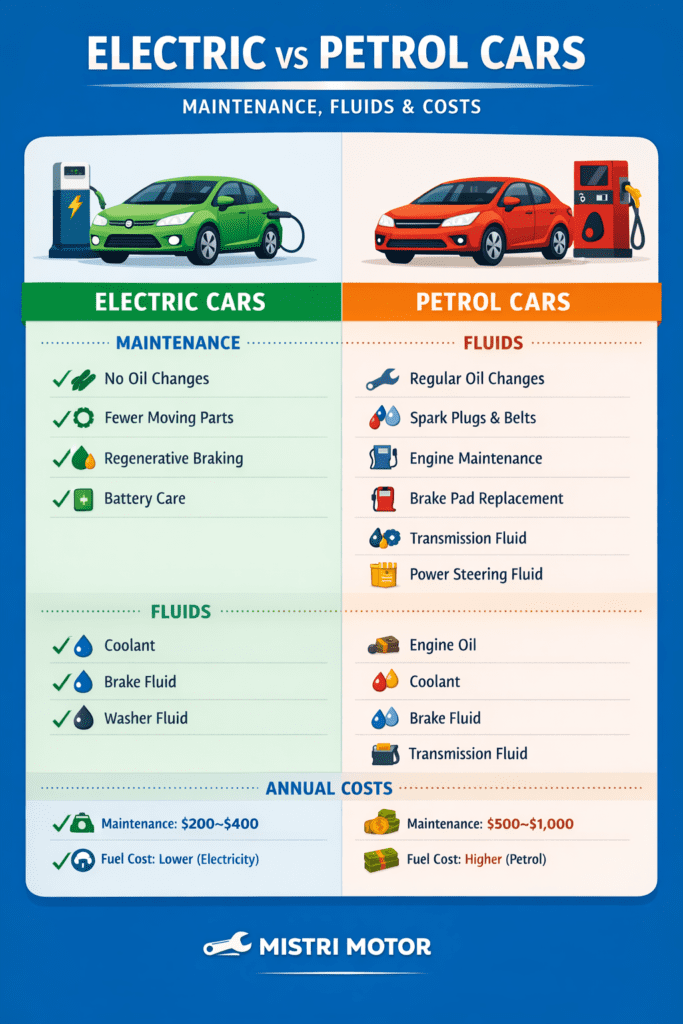
Electric cars vs Petrol Car Maintenance: Fluids, Costs, and Upkeep
With the rise of electric vehicles (EVs), many car buyers are asking: “How does maintenance differ between electric and petrol cars?” Understanding the differences in fluids, maintenance requirements, and costs is crucial for making the right decision and keeping your car reliable.
This guide breaks down everything you need to know about electric vs petrol car maintenance, including fluid requirements, routine upkeep, and cost comparisons.
1. Engine and Powertrain Maintenance
Petrol Cars
Petrol cars rely on internal combustion engines (ICE). The engine has many moving parts — pistons, valves, camshafts — which require regular maintenance:
- Oil changes: Every 5,000–10,000 km to keep engine lubricated.
- Spark plugs: Replaced every 20,000–50,000 km.
- Belts & timing chain: Require inspection and occasional replacement.
- Air filters: Replace every 12,000–15,000 km.
Electric Cars
EVs have electric motors with far fewer moving parts. Key points:
- No engine oil: Electric motors don’t need engine lubrication.
- No spark plugs, timing belts, or fuel injectors: Fewer components to service.
- Coolant: Some EVs use coolant for battery and motor temperature regulation.
Verdict: EVs generally require less powertrain maintenance than petrol cars, making them simpler to upkeep.
2. Fluids Comparison
Petrol Cars
Petrol cars rely heavily on fluids:
- Engine oil: Essential for lubrication and cooling.
- Coolant: Prevents engine overheating.
- Brake fluid: Transfers force to brakes.
- Transmission fluid: For smooth gear shifting.
- Power steering fluid: Ensures responsive steering.
- Windshield washer fluid: For visibility.
Electric Cars
Electric cars still need some fluids, but far fewer:
- Coolant: Maintains battery and motor temperature.
- Brake fluid: Still required, especially if regenerative braking is supplemented by hydraulic brakes.
- Windshield washer fluid: For visibility.
Verdict: EVs have fewer fluids to monitor, reducing maintenance complexity and cost.
3. Brake Maintenance
Petrol Cars
- Brakes experience full wear during every stop.
- Brake pads usually last 30,000–50,000 km depending on driving style.
Electric Cars
- Most EVs use regenerative braking, which slows the car using the motor, reducing reliance on mechanical brakes.
- Brake pads last longer (sometimes double the lifespan of petrol car brakes).
Verdict: EVs require less frequent brake maintenance.
4. Tires and Suspension
- Both petrol and electric cars require regular tire pressure checks, alignment, and suspension inspections.
- EVs tend to be heavier due to batteries, which can cause slightly faster tire wear, but maintenance intervals are otherwise similar.
5. Battery vs Fuel System Maintenance
Petrol Cars
- Fuel system components like injectors, fuel pump, and filters require occasional inspection.
- Battery is mainly for starting the car; replacement is less frequent.
Electric Cars
- High-voltage battery is the core of the vehicle.
- Battery longevity is typically 8–10 years or 150,000–250,000 km.
- Battery cooling and software updates are essential.
- Replacing a battery can be expensive, but many EVs offer warranties covering 8–10 years.
6. Long-Term Costs Comparison
Petrol Cars
- Oil changes, spark plugs, belts, fuel system maintenance add to recurring costs.
- Fuel expenses are ongoing and vary with usage.
- Average annual maintenance: $500–$1,000 depending on car type and age.
Electric Cars
- Fewer fluids, no oil changes, minimal brake maintenance.
- Electricity cost is typically cheaper than petrol.
- Occasional software updates or battery coolant maintenance.
- Average annual maintenance: $200–$400.
Verdict: EVs are cheaper to maintain over time, but initial purchase cost may be higher.
7. Environmental and Practical Considerations
- EVs have zero tailpipe emissions, which reduces environmental impact.
- Petrol cars contribute to pollution and require periodic emission checks.
- EVs are quieter, smoother, and require fewer repairs.