
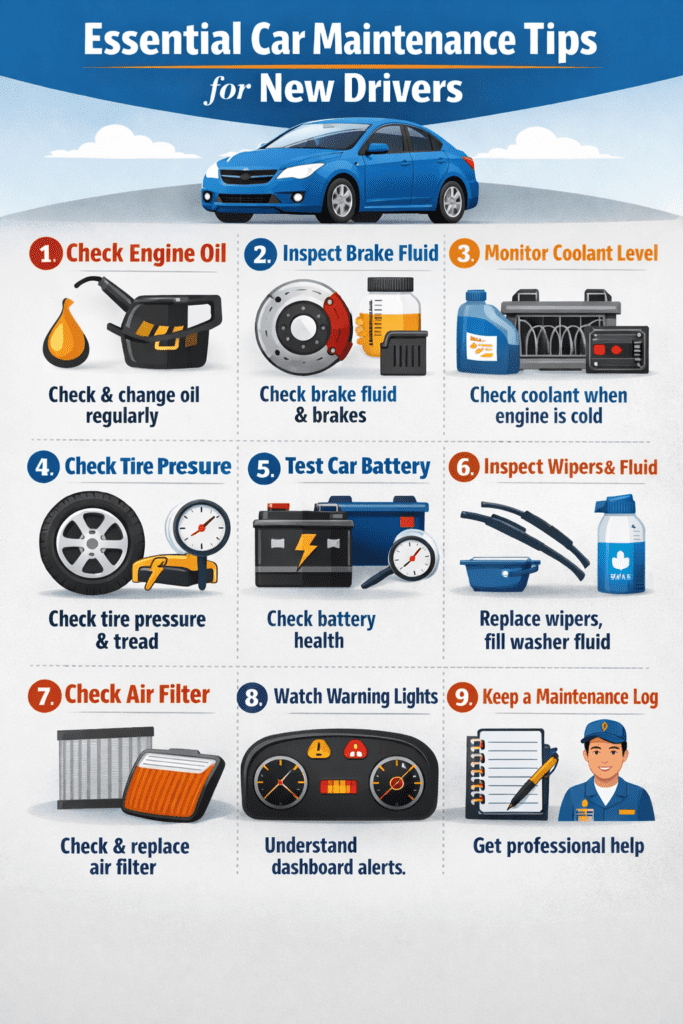
Essential Car Maintenance Tips for Every New Driver
Buying your first car is exciting, but many new drivers overlook the importance of regular maintenance. Proper car care is not just about avoiding breakdowns — it ensures safety, extends your car’s life, and saves money on costly repairs.
This guide covers essential car maintenance tips for beginners, focusing on fluids, brakes, tires, battery, and DIY checks you can easily perform at home. By following these tips, new drivers can keep their cars running smoothly and safely.
1. Check Engine Oil Regularly
Engine oil is the lifeblood of your vehicle. It lubricates moving parts, reduces friction, prevents overheating, and protects the engine from wear and tear.
Tips for New Drivers:
Check oil levels monthly using the dipstick.
Look for dark or burnt-smelling oil, which indicates it’s time for a change.
Replace engine oil every 5,000–10,000 km or as recommended in the owner’s manual.
Always use the correct oil type specified by your car manufacturer.
2. Inspect Brake Fluid and Brakes
Brakes are crucial for safety. Brake fluid transfers force from the pedal to the brake pads and ensures effective stopping.
Tips for Beginners:
Check fluid levels monthly. Keep it between the MIN and MAX marks.
Replace brake fluid every 1–2 years or as recommended.
Listen for squeaking or grinding noises — these may indicate worn brake pads.
Test brakes occasionally at low speed to ensure proper response.
3. Monitor Coolant Levels
Coolant prevents your engine from overheating and protects it from corrosion.
Tips for New Drivers:
Always check coolant when the engine is cold.
Maintain a 50:50 mix of coolant and water unless the manufacturer specifies otherwise.
Replace coolant every 2–3 years or if it looks dirty or rusty.
4. Maintain Tires and Tire Pressure
Proper tire care improves safety, fuel efficiency, and driving comfort.
Tips:
Check tire pressure monthly and before long trips. Use a tire pressure gauge for accuracy.
Inspect tread depth and look for cracks or uneven wear.
Rotate tires every 8,000–10,000 km to extend tire life.
Replace tires immediately if tread depth is below recommended levels.
5. Check and Maintain the Battery
A healthy battery ensures your car starts reliably and powers electrical systems efficiently.
Tips:
Inspect battery terminals for corrosion and clean them if necessary.
Ensure the battery is securely mounted.
Check voltage with a multimeter; replace the battery if it is weak.
Avoid leaving lights or accessories on when the car is off.
6. Keep Windshield Wipers and Washer Fluid in Check
Clear visibility is essential for safe driving, especially for beginners.
Tips:
Inspect wiper blades for cracks, wear, or streaking. Replace every 6–12 months.
Keep washer fluid topped up, especially during rainy or dusty seasons.
Test the spray system regularly to ensure proper coverage.
7. Inspect Air Filter Regularly
A clean air filter improves engine efficiency, fuel economy, and reduces emissions.
Tips:
Check air filter every 12,000–15,000 km.
Replace if it looks dirty, clogged, or damaged.
Ensure proper installation to prevent debris from entering the engine.
8. Understand Warning Lights and Dashboard Indicators
Modern cars have many warning lights to alert drivers about issues.
Tips:
Familiarize yourself with all dashboard symbols.
Don’t ignore warning lights like engine check, ABS, or oil pressure indicators.
Refer to your owner’s manual for guidance and consult a professional if needed.
9. Keep a Maintenance Log
Recording all maintenance activities helps track replacements, service dates, and ensures no fluid or component is missed.
Tips:
Note the date of oil changes, brake fluid replacements, coolant top-ups, and battery checks.
Use apps or physical logs for easy tracking.
A log helps identify recurring issues and makes professional servicing easier.
10. When to Visit a Professional Mechanic
While DIY maintenance is essential, some tasks require professional attention:
Engine diagnostics
Transmission checks
Brake servicing beyond pads replacement
Major battery issues
Electrical system troubleshooting
Tips:
Schedule regular servicing every 6–12 months.
Trust certified mechanics like Mistri Motor for reliable and professional car care.
Conclusion
For new drivers, regular car maintenance is the key to safety, reliability, and longevity. By following these essential tips — checking engine oil, brake fluid, coolant, tires, battery, air filter, and more — you can prevent common issues, reduce repair costs, and enjoy smooth driving.
Keep your car in top condition with expert services at Mistri Motor — from fluid checks to professional inspectionswe make sure your vehicle stays safe, reliable, and road-ready.