
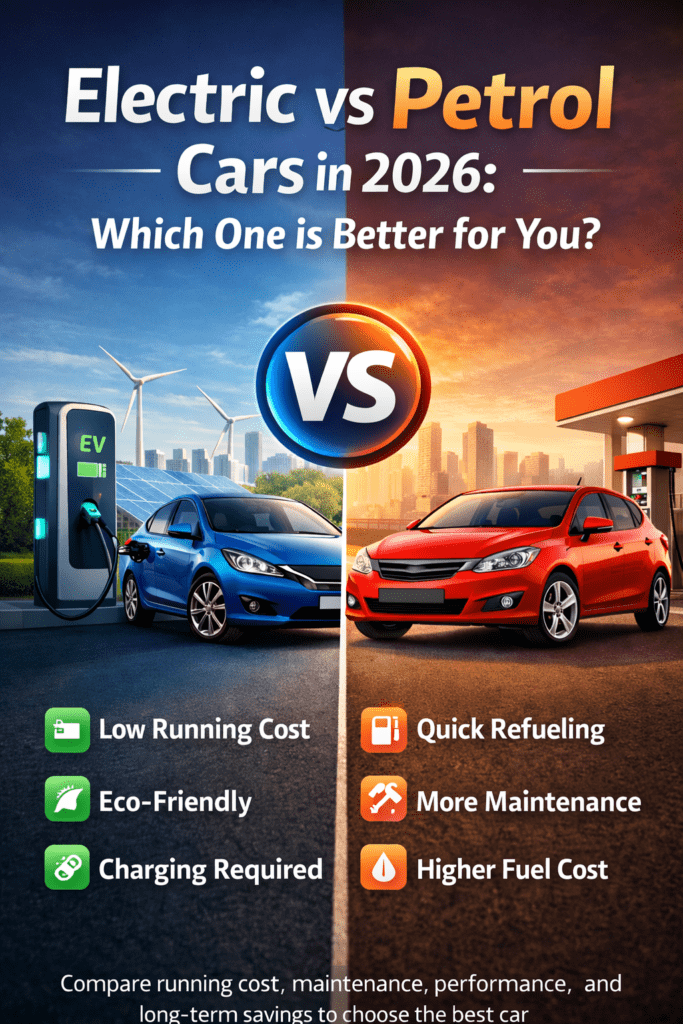
Electric vs Petrol Cars: Which One is Better in 2026?
Buying a new car in 2026 comes with one big question — should you choose an electric car or a petrol car? With fuel prices increasing and electric vehicles becoming more popular, many buyers are comparing both options carefully. Each type of car has its own benefits and limitations, so understanding the differences can help you make a smart decision.
Electric Cars – Modern & Cost-Effective
Electric vehicles (EVs) are growing quickly in India. Companies like Tata Motors, MG Motor, and Hyundai are launching new EV models with better range and features.
Advantages of Electric Cars
Low Running Cost
Electricity is cheaper than petrol or diesel. If you drive daily within the city, you can save a significant amount on fuel expenses.
Low Maintenance
EVs have fewer moving parts. There is no engine oil, clutch, or gearbox maintenance, which reduces service costs.
Eco-Friendly Option
Electric cars produce zero tailpipe emissions, helping reduce air pollution.
Smooth Driving Experience
They provide instant acceleration and silent performance, making driving comfortable.
Disadvantages of Electric Cars
- Charging stations are still developing in many areas.
- Charging takes longer than filling petrol.
- The initial purchase price can be higher than petrol cars.
Electric cars are ideal for daily office travel, city driving, and short trips.
Petrol Cars – Traditional & Practical
Petrol cars have been used for decades and remain a trusted choice. They are widely available and easy to maintain.
Advantages of Petrol Cars
Quick Refueling
It takes only a few minutes to fill the tank, making it convenient for long drives.
Better for Long-Distance Travel
Petrol pumps are available almost everywhere, so there is no range anxiety.
Lower Initial Cost
In many cases, petrol cars are more affordable to purchase compared to EVs.
Strong Service Network
Mechanics and spare parts are easily available across cities and towns.
Disadvantages of Petrol Cars
- Fuel prices can increase running costs.
- Regular maintenance like oil changes is required.
- Higher pollution compared to electric vehicles.
Petrol cars are suitable for people who travel long distances frequently or live in areas with limited charging infrastructure.
Electric vs Petrol: Cost & Usage Comparison
When comparing electric vs petrol cars, think long-term. EVs may cost more at the beginning but save money over time through lower running and maintenance costs. Petrol cars may be cheaper upfront but can become expensive due to fuel expenses.
If your daily travel is 20–40 km within the city, an electric car can be a smart and economical option. If you regularly go on highway trips, a petrol car might be more practical.
Final Conclusion
There is no single best option for everyone. The right choice depends on your budget, driving habits, and location.
- Choose an Electric Car for lower running cost and eco-friendly driving.
- Choose a Petrol Car for convenience and long-distance travel.
Before buying, compare total ownership cost, check charging availability in your area, and consider your future driving needs. Making an informed decision will ensure better savings and a smooth driving experience in 2026.