
Ultimate Vehicle inspection checklist: Keep Your Vehicle Safe and Road-Ready
Interior Vehicle Inspection
Inspecting the dashboard, controls, and steering wheel
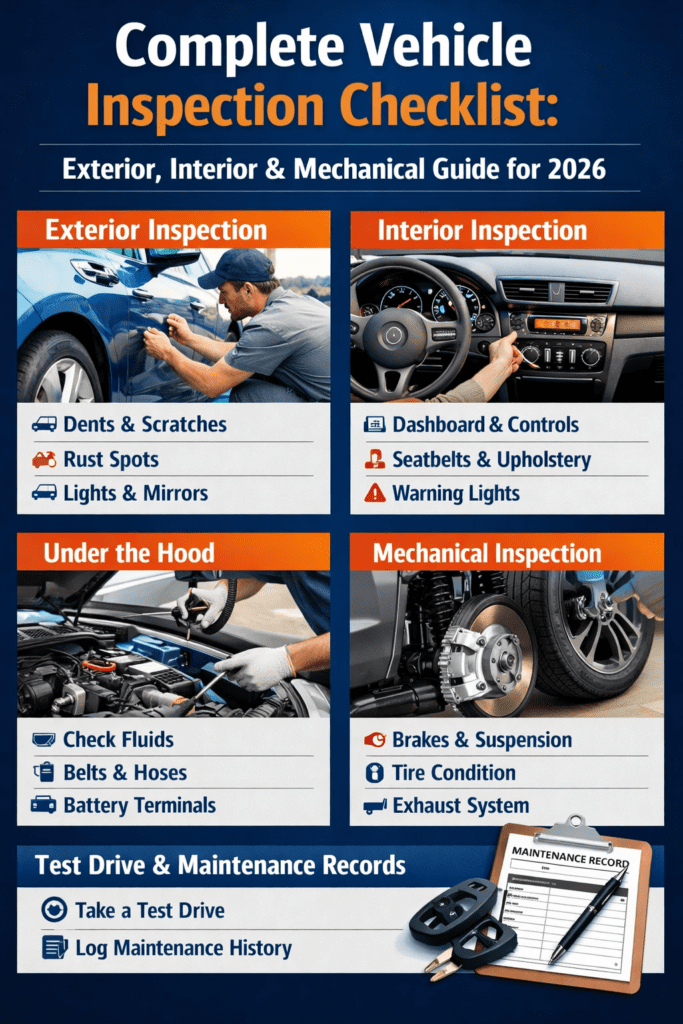
Look over the dashboard for any visible damage and confirm that warning lights function properly when the car starts. Test dashboard controls such as AC, radio, touchscreen, windshield wipers, and defroster. Verify smooth operation of power windows, locks, and mirrors. Inspect the steering wheel for wear, damage, or looseness, and ensure all mounted controls work. Check the instrument cluster gauges—speedometer, tachometer, fuel, and temperature—for accuracy.
Testing seat belts and upholstery
Examine seat belts for fraying, proper latching, and smooth retraction. Inspect seats for stains, tears, or excessive wear. Test all seat adjustments, including heated or cooled options. Check child seat anchors (LATCH system) to ensure they are accessible and secure. Clean upholstery if necessary, and check leather surfaces for cracking or fading.
Under the Hood Vehicle Inspection
Checking fluids (oil, coolant, brake fluid, etc.)
Check the engine oil with the dipstick; healthy oil should be amber and smooth, while dark, gritty, or foamy oil may need changing. Inspect the coolant reservoir to ensure levels are between the “min” and “max” marks and that there is no contamination. Verify that brake fluid is clear or slightly amber, and check power steering fluid levels, topping up with the recommended type if needed.
Inspecting belts, hoses, and battery terminals
Look for cracks, fraying, or looseness in belts, and check hoses for leaks, bulges, or soft spots. Inspect battery terminals for corrosion and ensure connections are tight. Clean terminals if necessary and apply dielectric grease to prevent future buildup. Proper maintenance of these components helps avoid engine problems and ensures smooth operation.
Under the Hood Vehicle Inspection
Checking fluids (oil, coolant, brake fluid, etc.)
Check the engine oil with the dipstick; healthy oil should be amber and smooth, while dark, gritty, or foamy oil may need changing. Inspect the coolant reservoir to ensure levels are between the “min” and “max” marks and that there is no contamination. Verify that brake fluid is clear or slightly amber, and check power steering fluid levels, topping up with the recommended type if needed.
Inspecting belts, hoses, and battery terminals
Look for cracks, fraying, or looseness in belts, and check hoses for leaks, bulges, or soft spots. Inspect battery terminals for corrosion and ensure connections are tight. Clean terminals if necessary and apply dielectric grease to prevent future buildup. Proper maintenance of these components helps avoid engine problems and ensures smooth operation.
Mechanical Components Inspection
Testing brakes, suspension, and steering
Press the brakes at low speed to check responsiveness and listen for unusual sounds. Test the suspension by pressing down on each corner of the car to see if it rebounds properly and listen for abnormal noises. Turn the steering wheel to check for smooth operation, proper alignment, and absence of excessive play.
Examining tires for wear and proper inflation
Check tire tread depth with a gauge or the penny test, and look for uneven wear, bulges, or cuts. Measure tire pressure and adjust to manufacturer-recommended levels. Inspect valve stems for damage to ensure safe and efficient driving.
Exhaust system inspection
Examine the exhaust system, including the muffler and catalytic converter, for rust, holes, cracks, or loose parts. Listen for unusual noises or smells, and watch for excessive smoke from the tailpipe, which could indicate a problem.
Boot Vehicle Inspection
Inspect the trunk for water leaks, stains, or damaged seals. Ensure the spare tire, jack, and tools are in place and in usable condition. Test the trunk latch and hinges to ensure smooth, secure operation, and check for any rust or damage.
Necessary Tools and Equipment for Car Inspection
Essential tools include a flashlight to inspect hard-to-see areas, tire pressure and tread gauges, jack and jack stands for safe lifting, wrenches, pliers, screwdrivers, oil dipstick and funnel, fluid testers, battery tester, and safety gear such as gloves and eyewear. Using the proper tools makes the inspection safe and thorough.
Documentation and Maintenance
Keep a detailed log of all inspections, repairs, and replacements, noting dates, mileage, and work performed. Store receipts and invoices for parts and services. Follow the manufacturer’s maintenance schedule and set reminders for routine tasks like oil changes, filter replacements, and fluid top-ups. Maintaining accurate records helps track your car’s health and resale value.
Test Drive
Take your car for a test drive to evaluate performance. Pay attention to steering, braking, acceleration, suspension, and overall handling. Listen for unusual noises or vibrations and note any irregularities. A test drive confirms that your car is operating safely and efficiently on the road.
Conclusion
A thorough vehicle inspection is essential to keep your car safe, reliable, and well-maintained. Regular checks of the exterior, interior, under-the-hood components, tires, and mechanical systems help detect problems early, prevent costly repairs, and ensure your car is ready for the road. With the right tools, routine inspections, and proper maintenance, vehicle owners can enjoy peace of mind, better performance, and a longer-lasting vehicle.