
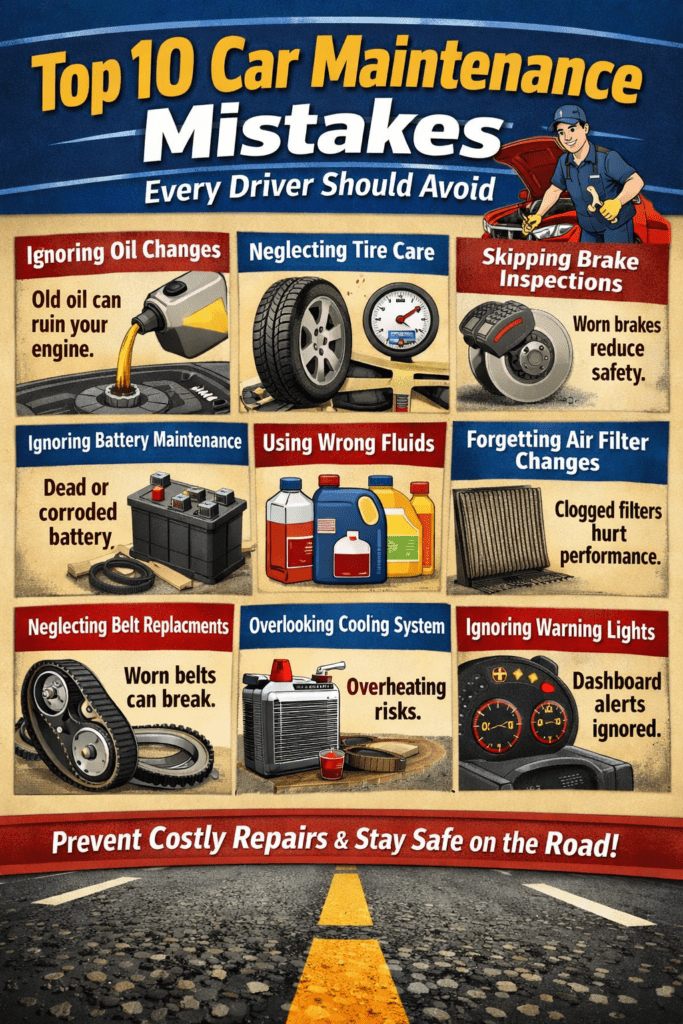
Top 10 Car Maintenance Mistakes Drivers Make
Owning a car is a privilege, but it comes with responsibilities that go beyond just driving from point A to B. Many drivers unknowingly make mistakes in car maintenance, which can lead to decreased performance, costly repairs, and even safety risks. Regular, attentive care can extend your car’s lifespan, improve fuel efficiency, and keep you safe on the road. Here are the top 10 car maintenance mistakes drivers make and what you should do to avoid them.
1. Ignoring Regular Oil Changes
Engine oil is essential for keeping your car running smoothly. It lubricates moving parts, reduces friction, prevents overheating, and protects your engine from wear and tear. Unfortunately, many drivers either ignore oil changes or delay them beyond the recommended schedule, which can lead to sludge buildup, poor engine performance, and eventually engine failure. Regular oil changes, using the correct type of oil, and monitoring oil levels and quality are simple steps that can save thousands of rupees in repairs and keep your engine healthy for years.
2. Neglecting Tire Maintenance
Tires are the only part of your car that touches the road, yet many drivers underestimate their importance. Driving on worn, underinflated, or unbalanced tires not only reduces fuel efficiency but also affects handling, braking, and overall safety. Regularly checking tire pressure, inspecting tread depth, rotating tires, and replacing them before they become dangerously worn are crucial for smooth driving. Ignoring these steps can lead to blowouts, uneven wear, and costly replacements that could have been avoided with proper care.
3. Skipping Brake Inspections
Your brakes are one of the most critical safety systems in your car, yet many drivers don’t inspect them regularly. Worn brake pads, damaged rotors, or low brake fluid can compromise stopping power, increasing the risk of accidents. Brake issues often start small, like squealing or vibration, but can quickly escalate into serious problems if ignored. Scheduling annual brake inspections, listening for warning signs, and replacing parts on time ensures that your brakes are always reliable, giving you confidence behind the wheel.
4. Overlooking Battery Care
A car battery is often taken for granted until it fails, leaving you stranded. Batteries degrade naturally over time, and factors like heat, humidity, or infrequent driving can accelerate this process. Corrosion on terminals or low voltage can cause starting problems and affect the car’s electrical systems. Regular battery inspections, cleaning terminals, checking voltage, and replacing the battery when necessary help avoid unexpected breakdowns and keep all electrical components functioning smoothly.
5. Ignoring Air Filter Replacement
The air filter may seem minor, but it plays a crucial role in keeping your engine clean and efficient. A clogged or dirty air filter reduces airflow, which decreases fuel efficiency, reduces engine performance, and increases emissions. Many drivers overlook this small but essential part, which is inexpensive to replace. Checking your air filter every 12,000–15,000 km, or more frequently in dusty areas, ensures your engine breathes clean air and runs at its best, saving money and improving performance.
6. Using the Wrong Fluids
Modern vehicles rely on several fluids to operate smoothly, including engine oil, transmission fluid, brake fluid, power steering fluid, and coolant. Using the wrong type, or failing to replace fluids at recommended intervals, can lead to component damage, poor performance, and expensive repairs. Many drivers assume that topping off fluids is enough, but old, contaminated fluids lose effectiveness. Always use the correct type and maintain fluid levels to ensure every system in your car works optimally and lasts longer.
7. Neglecting Timing Belt and Serpentine Belt Checks
Timing belts and serpentine belts are critical for your engine’s operation. A worn or snapped belt can lead to engine failure, overheating, or loss of essential systems such as power steering and air conditioning. Despite their importance, many drivers neglect belt inspections, which often leads to expensive emergency repairs. Regularly checking belts for cracks, fraying, or wear, and replacing them according to the manufacturer’s schedule, ensures smooth engine performance and prevents costly breakdowns on the road.
8. Failing to Maintain the Cooling System
The cooling system keeps your engine from overheating, but it is often overlooked. Low coolant levels, old fluid, clogged radiators, or damaged hoses can cause overheating, which damages your engine and leads to expensive repairs. Many drivers only notice a problem when the engine is already hot or smoking. Checking coolant levels regularly, flushing the system according to schedule, and inspecting hoses for leaks or cracks helps maintain optimal engine temperature and prevents costly damage.
9. Neglecting Regular Washes and Rust Prevention
Your car’s exterior is constantly exposed to dirt, salt, moisture, and pollutants, all of which can cause rust and paint damage. Many drivers underestimate the importance of washing, waxing, and rust prevention. Regular cleaning removes harmful substances, while waxing provides a protective layer that keeps your car looking new. Checking the underbody and wheel wells for rust, especially in older cars or vehicles in wet climates, prevents small problems from becoming serious structural issues that are expensive to fix.
10. Ignoring Warning Lights and Strange Noises
Modern cars are equipped with sensors that alert you to potential issues before they become severe. Ignoring warning lights, unusual sounds, or vibrations can turn minor problems into major repairs. Many drivers wait too long to investigate, thinking it’s nothing serious. Paying attention to your car’s signals, getting regular diagnostic checks, and addressing unusual symptoms immediately can prevent breakdowns, extend the life of your car, and ensure a safer driving experience.
Simple maintenance can save you from big headaches later. By checking your car regularly and addressing issues early, you keep it reliable, safe, and running at its best.
Owning a car is a privilege, but it comes with responsibilities that go beyond just driving from point A to B. Many drivers unknowingly make mistakes in car maintenance, which can lead to decreased performance, costly repairs, and even safety risks. Regular, attentive care can extend your car’s lifespan, improve fuel efficiency, and keep you safe on the road. Here are the top 10 car maintenance mistakes drivers make and what you should do to avoid them.
1. Ignoring Regular Oil Changes
Engine oil is essential for keeping your car running smoothly. It lubricates moving parts, reduces friction, prevents overheating, and protects your engine from wear and tear. Unfortunately, many drivers either ignore oil changes or delay them beyond the recommended schedule, which can lead to sludge buildup, poor engine performance, and eventually engine failure. Regular oil changes, using the correct type of oil, and monitoring oil levels and quality are simple steps that can save thousands of rupees in repairs and keep your engine healthy for years.
2. Neglecting Tire Maintenance
Tires are the only part of your car that touches the road, yet many drivers underestimate their importance. Driving on worn, underinflated, or unbalanced tires not only reduces fuel efficiency but also affects handling, braking, and overall safety. Regularly checking tire pressure, inspecting tread depth, rotating tires, and replacing them before they become dangerously worn are crucial for smooth driving. Ignoring these steps can lead to blowouts, uneven wear, and costly replacements that could have been avoided with proper care.
3. Skipping Brake Inspections
Your brakes are one of the most critical safety systems in your car, yet many drivers don’t inspect them regularly. Worn brake pads, damaged rotors, or low brake fluid can compromise stopping power, increasing the risk of accidents. Brake issues often start small, like squealing or vibration, but can quickly escalate into serious problems if ignored. Scheduling annual brake inspections, listening for warning signs, and replacing parts on time ensures that your brakes are always reliable, giving you confidence behind the wheel.
4. Overlooking Battery Care
A car battery is often taken for granted until it fails, leaving you stranded. Batteries degrade naturally over time, and factors like heat, humidity, or infrequent driving can accelerate this process. Corrosion on terminals or low voltage can cause starting problems and affect the car’s electrical systems. Regular battery inspections, cleaning terminals, checking voltage, and replacing the battery when necessary help avoid unexpected breakdowns and keep all electrical components functioning smoothly.
5. Ignoring Air Filter Replacement
The air filter may seem minor, but it plays a crucial role in keeping your engine clean and efficient. A clogged or dirty air filter reduces airflow, which decreases fuel efficiency, reduces engine performance, and increases emissions. Many drivers overlook this small but essential part, which is inexpensive to replace. Checking your air filter every 12,000–15,000 km, or more frequently in dusty areas, ensures your engine breathes clean air and runs at its best, saving money and improving performance.
6. Using the Wrong Fluids
Modern vehicles rely on several fluids to operate smoothly, including engine oil, transmission fluid, brake fluid, power steering fluid, and coolant. Using the wrong type, or failing to replace fluids at recommended intervals, can lead to component damage, poor performance, and expensive repairs. Many drivers assume that topping off fluids is enough, but old, contaminated fluids lose effectiveness. Always use the correct type and maintain fluid levels to ensure every system in your car works optimally and lasts longer.
7. Neglecting Timing Belt and Serpentine Belt Checks
Timing belts and serpentine belts are critical for your engine’s operation. A worn or snapped belt can lead to engine failure, overheating, or loss of essential systems such as power steering and air conditioning. Despite their importance, many drivers neglect belt inspections, which often leads to expensive emergency repairs. Regularly checking belts for cracks, fraying, or wear, and replacing them according to the manufacturer’s schedule, ensures smooth engine performance and prevents costly breakdowns on the road.
8. Failing to Maintain the Cooling System
The cooling system keeps your engine from overheating, but it is often overlooked. Low coolant levels, old fluid, clogged radiators, or damaged hoses can cause overheating, which damages your engine and leads to expensive repairs. Many drivers only notice a problem when the engine is already hot or smoking. Checking coolant levels regularly, flushing the system according to schedule, and inspecting hoses for leaks or cracks helps maintain optimal engine temperature and prevents costly damage.
9. Neglecting Regular Washes and Rust Prevention
Your car’s exterior is constantly exposed to dirt, salt, moisture, and pollutants, all of which can cause rust and paint damage. Many drivers underestimate the importance of washing, waxing, and rust prevention. Regular cleaning removes harmful substances, while waxing provides a protective layer that keeps your car looking new. Checking the underbody and wheel wells for rust, especially in older cars or vehicles in wet climates, prevents small problems from becoming serious structural issues that are expensive to fix.
10. Ignoring Warning Lights and Strange Noises
Modern cars are equipped with sensors that alert you to potential issues before they become severe. Ignoring warning lights, unusual sounds, or vibrations can turn minor problems into major repairs. Many drivers wait too long to investigate, thinking it’s nothing serious. Paying attention to your car’s signals, getting regular diagnostic checks, and addressing unusual symptoms immediately can prevent breakdowns, extend the life of your car, and ensure a safer driving experience.
Simple maintenance can save you from big headaches later. By checking your car regularly and addressing issues early, you keep it reliable, safe, and running at its best.