
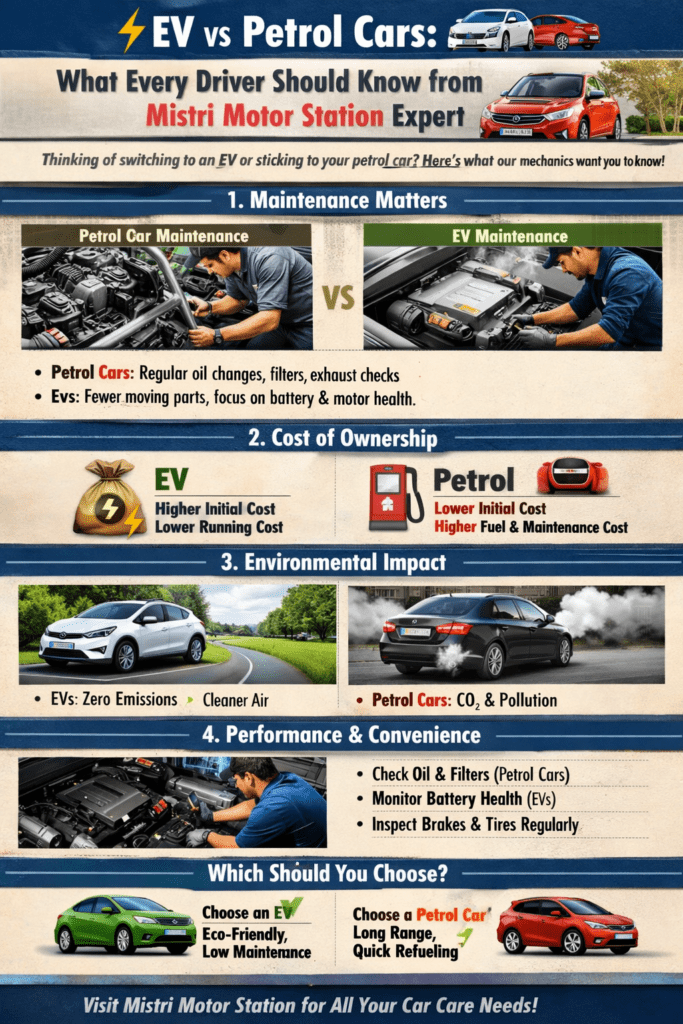
Electric Car vs Petrol Car: What Every Driver Should Know from a Mistri Motor Station Expert
Traditional cars require regular maintenance. This includes engine oil and filter changes, spark plug replacement, brake inspections, and exhaust system checks. With hundreds of moving parts under the hood, there’s a higher risk of wear and tear, and over time, maintenance costs add up.
Electric Vehicles (EVs):
EVs are mechanically simpler — no engine oil, no exhaust systems, no timing belts. The biggest focus is the battery and motor health. At Mistri Motor Station, we use specialized diagnostic tools to monitor battery performance, check the motor, and ensure the charging system is in top condition. While EV maintenance is generally lower, proper care is essential to extend battery life.
2. Cost of Ownership
EVs:
The initial purchase price of an EV is higher than a petrol car, but running costs are significantly lower. Electricity is cheaper than petrol, and fewer moving parts mean fewer repairs. Over the long term, EVs can save thousands of rupees in fuel and maintenance.
Petrol/Diesel Cars:
The upfront cost is lower, making them easier to buy. However, fuel expenses, regular oil changes, and engine servicing make them more expensive over time. For long-distance drivers, petrol cars remain more convenient because of the well-established refueling network.
3. Environmental Impact
EVs:
EVs produce zero tailpipe emissions, making them environmentally friendly. Driving an EV reduces urban air pollution and contributes to a cleaner, healthier environment. If the electricity comes from renewable sources, the carbon footprint is even lower.
Oil Cars:
Traditional cars emit CO₂, NOx, and other pollutants. These emissions not only harm the environment but also affect your health, especially in cities with heavy traffic.
4. Performance & Driving Experience
EVs:
EVs offer instant torque, which means faster acceleration from a standstill. They’re quiet, smooth, and fun to drive. Regenerative braking also helps extend brake life. However, charging takes longer than refueling — fast charging takes around 30 minutes, while normal charging may take several hours.
Oil Cars:
Petrol and diesel cars are familiar to most drivers, offering long uninterrupted ranges and quick refueling. They perform reliably for long drives and heavy use, without depending on charging infrastructure.
5. Expert Tips from Mistri Motor Station
No matter what type of car you own, regular checkups are essential:
- Petrol/Diesel Cars:
- Check engine oil, brake pads, and filters regularly.
- Inspect tires and suspension every month.
- Keep an eye on fuel efficiency — a sudden drop may indicate a mechanical issue.
- Electric Vehicles (EVs):
- Monitor battery health and charging efficiency.
- Check tire pressure and brakes periodically.
- Schedule periodic motor inspections to prevent costly repairs.
At Mistri Motor Station, our team is trained to handle both petrol and EV servicing. Whether it’s a routine oil change, brake replacement, or advanced EV diagnostics, we make sure your vehicle stays safe and reliable.
6. Which One Should You Choose?
- Choose an EV if: You prioritize lower running costs, less maintenance, eco-friendly driving, and mostly city commuting.
- Choose a petrol/diesel car if: You need long-range driving convenience, quick refueling, and a lower upfront purchase cost.
Final Words
The choice between EVs and petrol/diesel cars is personal, but one thing is certain: every vehicle needs proper maintenance. A skilled mechanic can save you money, extend vehicle life, and make your driving experience safer and smoother.
At Mistri Motor Station, we are committed to keeping your car in top condition, whether it runs on petrol, diesel, or electricity. Drive smart, maintain regularly,