
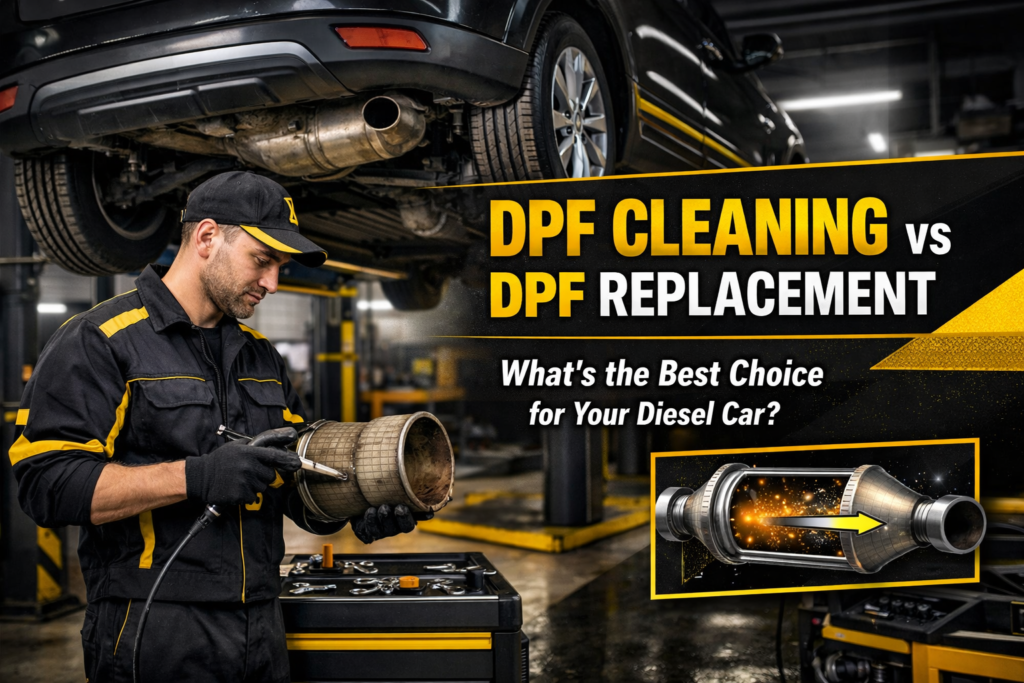
DPF Cleaning Service vs DPF Replacement – Protect Your Diesel Engine and Save Money
Diesel vehicles are celebrated for their durability, fuel efficiency, and high performance. Yet, modern diesel engines come equipped with emission control systems, and the Diesel Particulate Filter (DPF) is a key component of this system.
The DPF captures harmful soot and carbon particles from your exhaust, keeping your car environmentally compliant and helping the engine perform efficiently. Over time, soot and ash accumulate inside the filter, which can lead to blockages. A blocked DPF may reduce engine efficiency, increase fuel consumption, and trigger warning lights on your dashboard.
At this stage, many car owners face a critical question: should you opt for DPF cleaning or replace the filter entirely? Making the right choice ensures your engine stays healthy and avoids unnecessary costs.
What Does a Diesel Particulate Filter Do?
The Diesel Particulate Filter is installed in the exhaust system to trap soot and prevent harmful particles from escaping into the atmosphere. It plays a crucial role in maintaining engine efficiency and meeting emission standards.
Modern DPFs can self-clean through a process called regeneration, where trapped soot burns off at high temperatures. However, frequent short trips, stop-and-go city traffic, and poor engine maintenance can prevent proper regeneration. This leads to soot buildup and eventual blockage of the filter.
How to Recognize a Clogged DPF
Identifying DPF problems early can save you from expensive repairs. Common symptoms include:
- DPF warning light on the dashboard
- Reduced engine performance or limp mode
- Increased fuel consumption
- Black smoke from the exhaust
- Frequent regeneration attempts
Ignoring these signs can lead to permanent filter damage and impact other parts of the engine.
Benefits of Professional DPF Cleaning
DPF cleaning is a specialized service that removes soot, ash, and carbon deposits from your filter. Technicians use advanced equipment to restore airflow and efficiency without replacing the DPF.
Advantages of DPF Cleaning:
- Cost-Effective: Much cheaper than replacing the filter
- Restores Engine Performance: Engine runs efficiently again
- Improves Fuel Economy: Helps maintain optimal mileage
- Reduces Emissions: Keeps your vehicle environmentally compliant
- Extends DPF Life: Delays the need for replacement
For most vehicles experiencing early blockage, cleaning is the preferred and economical solution.
When DPF Replacement Becomes Necessary
Sometimes, cleaning alone cannot solve the problem. Replacement is required if the filter is physically damaged, melted, or has excessive ash that cannot be removed.
Situations that may require replacement include:
- Cracked or melted filter structure
- Severe ash buildup that cannot be cleaned
- Long-term neglect causing permanent blockage
- Failed previous cleaning attempts
While replacement restores the filter fully, it is more expensive and should be considered only when cleaning is ineffective.
Choosing the Right Option for Your Diesel Car
For most diesel vehicles, DPF cleaning is the recommended first step. It restores engine performance, improves fuel efficiency, and prevents unnecessary replacement costs. Replacement should only be considered when the filter is damaged beyond repair or cleaning fails to restore its functionality.
Regular DPF maintenance ensures your diesel car runs efficiently, consumes less fuel, and avoids costly engine problems.
Keep Your Diesel Engine Performing – Book DPF Cleaning Today
A clogged DPF affects more than just your dashboard—it can reduce engine efficiency, increase fuel consumption, and lead to expensive repairs. Acting early is key to maintaining your diesel vehicle’s performance.
Professional DPF Cleaning Service removes soot buildup, restores engine efficiency, and extends the life of your filter.
Timely maintenance ensures lower emissions, better fuel economy, and a longer vehicle lifespan, helping you avoid costly replacements while maintaining peak engine performance.