
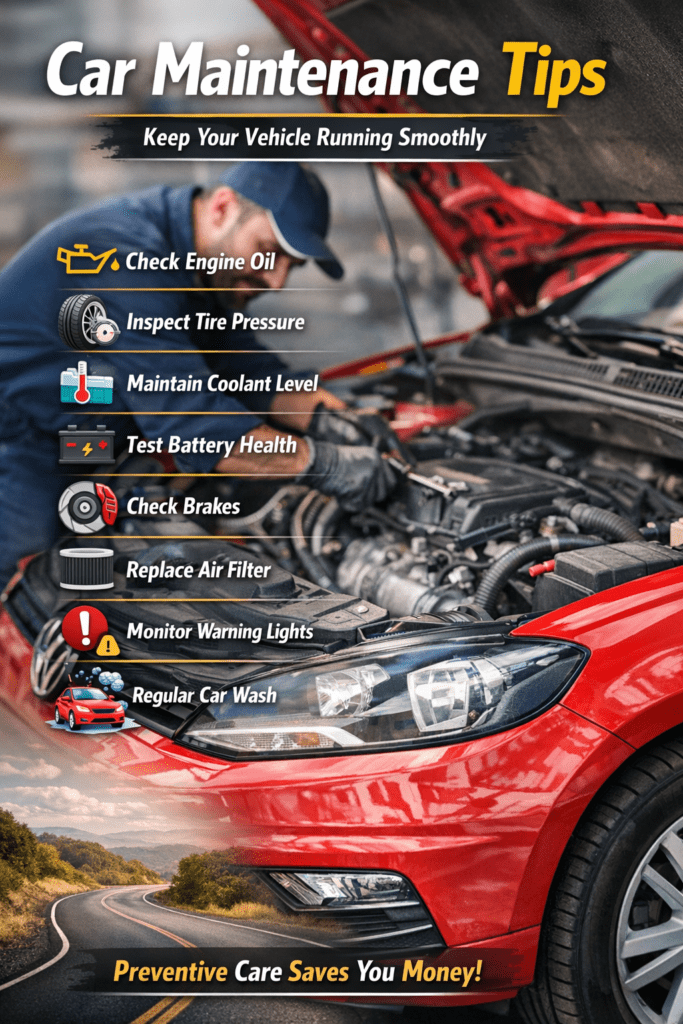
Complete Car Maintenance Guide: Keep Your Vehicle Running Smoothly for Years
Owning a car is a long-term responsibility. While driving gives comfort and convenience, maintaining your vehicle ensures safety, performance, and cost savings. Many car owners ignore routine maintenance until a serious problem appears. However, regular care is the best way to avoid expensive repairs and unexpected breakdowns.
This complete guide explains simple yet effective maintenance practices that will help your car stay reliable and efficient for years.
1. Follow a Regular Service Schedule
Routine servicing is the foundation of good vehicle health. Even if your car feels normal, internal components wear out over time.
Regular service usually includes:
- Engine inspection
- Oil and filter replacement
- Brake check
- Suspension inspection
- Fluid level check
Following a consistent service schedule improves performance and prevents major mechanical failures.
2. Change Engine Oil on Time
Engine oil lubricates internal engine parts and reduces friction. Over time, oil becomes dirty and loses its effectiveness.
Recommended oil change interval:
- Every 5,000–10,000 km depending on usage and oil type
- Delaying oil changes may result in:
- Reduced fuel efficiency
- Increased engine wear
- Overheating problems
Clean oil keeps the engine smooth and efficient.
3. Maintain the Cooling System
The cooling system prevents the engine from overheating, especially during long drives and hot weather.
To maintain it properly:
- Check coolant level monthly
- Inspect radiator and hoses
- Replace coolant when required
Ignoring cooling issues can cause severe engine damage.
4. Check Tire Pressure and Condition
Tires play a major role in safety and fuel efficiency.
Important tire maintenance tips:
- Check air pressure every two weeks
- Rotate tires every 8,000–10,000 km
- Inspect tread depth
- Ensure proper wheel alignment
Correct tire pressure improves mileage and road grip.
5. Inspect Brakes Regularly
Brakes are critical for safe driving. Any unusual sound or delay in braking should be checked immediately.
Warning signs include:
- Squeaking noise
- Vibrations while braking
- Soft brake pedal
Timely brake maintenance ensures safety on the road.
6. Monitor Battery Health
A weak battery can cause starting issues and electrical failures.
Battery care tips:
- Clean terminals regularly
- Check battery voltage during service
- Replace battery if performance drops
Proper battery maintenance prevents sudden breakdowns.
7. Replace Filters on Time
Air and cabin filters protect the engine and improve interior air quality.
Dirty filters can reduce:
- Engine performance
- Fuel efficiency
- Cabin comfort
Replacing filters at recommended intervals keeps the vehicle running smoothly.
8. Keep Your Car Clean
Regular washing protects paint from dirt and rust. Interior cleaning maintains hygiene and improves resale value.
Simple cleaning habits:
- Wash the car every 1–2 weeks
- Apply wax periodically
- Clean interior surfaces regularly
A clean vehicle not only looks better but also lasts longer.
9. Pay Attention to Warning Lights
Modern vehicles are equipped with dashboard warning indicators. Never ignore them, even if the car feels normal.
Early diagnosis helps prevent minor problems from becoming costly repairs.
Conclusion
Car maintenance is not complicated — it simply requires consistency and awareness. Small steps like checking engine oil, maintaining tire pressure, inspecting brakes, and monitoring fluids can significantly extend your vehicle’s lifespan.
Preventive care saves money, improves safety, enhances performance, and increases resale value. By making regular maintenance a habit, you ensure dependable performance and peace of mind on every journey.
A well-maintained car is safer, more efficient, and more reliable — and that makes every drive smoother and more enjoyable. 🚗
A well-maintained car is safer, more efficient, and more reliable
and that makes every drive smoother and more enjoyable.